
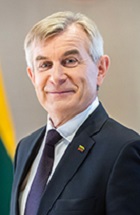
Viktoras Pranckietis yra Lietuvos politikas ir agronomas, kuris 2016–2020 m. ėjo Lietuvos Respublikos Seimo Pirmininko pareigas. Jis ilgą laiką dirbo akademinėje srityje, buvo Aleksandro Stulginskio universiteto profesorius ir dekanas. Politinėje veikloje buvo susijęs su Lietuvos valstiečių ir žaliųjų sąjunga, vėliau prisijungė prie Liberalų sąjūdžio. 2020 m. ir 2024 m. buvo išrinktas į Seimą Liberalų sąjūdžio sąrašu.
„Date of birth | 26 July 1958 Place of birth | Ruteliai Village, Kelmė District, Lithuania“
Santrauka (angl.) Viktoras Pranckietis was born on 26 July 1958 in Ruteliai Village, Kelmė District, Lithuania.
„Family | Wife Irena, son Vaidotas, daughters Viktorija and Monika“
Santrauka (angl.) He is married to Irena and has three children: a son (Vaidotas) and two daughters (Viktorija and Monika).
„Languages: English, Polish and Russian“
Santrauka (angl.) He is fluent in English, Polish, and Russian.
„1998 | Doctor of Biomedical Sciences“
Santrauka (angl.) He obtained a Doctor of Biomedical Sciences (PhD) degree in 1998.
„1977–1982 | Master’s degree, Lithuanian Academy of Agriculture (currently Vytautas Magnus University Agricultural Academy)“
Santrauka (angl.) He earned a Master’s degree in agronomy from the Lithuanian Academy of Agriculture in 1982.
„2016 | A. Stulginskio universiteto (dabar – Vytauto Didžiojo universiteto Žemės ūkio akademija) profesorius“
Santrauka (angl.) He was awarded the academic title of Professor at Aleksandras Stulginskis University (the agricultural academy) in 2016.
„2008–2016 | Dean, Faculty of Agronomy, Lithuanian Academy of Agriculture (currently Vytautas Magnus University Academy of Agriculture)“
Santrauka (angl.) From 2008 to 2016, he was the Dean of the Faculty of Agronomy at the Lithuanian Academy of Agriculture (now part of Vytautas Magnus University).
„1999–2015 | Ūkininkas“
Santrauka (angl.) Between 1999 and 2015, Pranckietis was officially registered as a farmer (ūkininkas), maintaining a private agricultural farm in addition to his academic duties.
„1998–2016 | Associate Professor, Lithuanian Academy of Agriculture… 2006–2008 | Head of the Department of Gardening and Horticulture… 2008–2016 | Dean, Faculty of Agronomy, Lithuanian Academy of Agriculture“
Santrauka (angl.) Pranckietis spent his career in academia, serving at the Lithuanian Academy of Agriculture (later Aleksandras Stulginskis University) from the 1980s until 2016 in roles including lecturer, department head, and dean.
„1976 – 1977 m. Tytuvėnų sodininkystės ūkis, sodo agronomas“
Santrauka (angl.) Before completing his studies, Pranckietis worked as an orchard agronomist at the Tytuvėnai horticultural farm in 1976–1977.
„1999–2015 | Ūkininkas … 1982–2016 | Various academic positions“
Santrauka (angl.) He has no record of involvement in any private companies or corporate boards – throughout his career outside politics he worked in academia and ran his family farm, with no other business ventures noted.
„parlamento pirmininkas Viktoras Pranckietis ir vėl partinis – buvęs „valstietis“ įstojo į Viktorijos Čmilytės-Nielsen vadovaujamą partiją.“
Santrauka (angl.) He officially joined the Liberal Movement party as a member on 6 November 2020, having previously left the LVŽS in 2019.
„2019 09 išstojo iš partijos. Nuo 2020 Lietuvos Respublikos liberalų sąjūdžio narys.“
Santrauka (angl.) He formally became a member of the Liberal Movement (Liberalų sąjūdis) in 2020 after leaving the LVŽS.
„Iš partijos V. Pranckietis sako besitraukiantis, nes nenori suteikti galimybės partijai jį pašalinti.... V. Pranckietis trauktis iš Seimo pirmininko pareigų atsisako, teigdamas, kad jo postas „socialdarbiečiams“ perleistas kerštaujant jam dėl to, kad nepataikavo LVŽS lyderiui Ramūnui Karbauskiui.“
Santrauka (angl.) He left the Lithuanian Farmers and Greens Union in 2019 amid a dispute with the party’s leader, becoming politically unaffiliated while remaining Speaker.
„2016-11-14 – 2020-11-13 | Seimo Pirmininkas“
Santrauka (angl.) He served as the Speaker of the Seimas of the Republic of Lithuania from November 2016 until November 2020.
„2016–2020 |... Speaker of the Seimas... | Member, Board of the Seimas | Member, Conference of Chairs“
Santrauka (angl.) As Speaker, he was an ex officio member of the Board of the Seimas and the Conference of Chairs during the 2016–2020 term.
„2016 metais į Seimą politikas pateko kaip Lietuvos valstiečių ir žaliųjų sąjungos narys“
Santrauka (angl.) Pranckietis was first elected to the Seimas (national parliament) in 2016 as a candidate of the Lithuanian Farmers and Greens Union (LVŽS).
„2015–2016 | Member, Municipal Council, Kaunas District“
Santrauka (angl.) He served as a member of the Kaunas District Municipal Council from 2015 to 2016.
„2014–2019 |... Council Member, Deputy Chairperson, Lithuanian Farmers and Greens Union“
Santrauka (angl.) He was a leading member of the Lithuanian Farmers and Greens Union from 2014 to 2019, serving on its board and as a Deputy Chairperson of the party.
„2024-11-19 | Kaimo reikalų komitetas, Komiteto narys“
Santrauka (angl.) As of the 2024–2028 term, Pranckietis is a member of the Seimas Committee on Rural Affairs (beginning November 2024).
„12/17/2020 - 11/14/2024 | Committee for the Future, Member“
Santrauka (angl.) He was also a member of the Seimas Committee for the Future from 2020 to 2024.
„11/19/2020 - 11/14/2024 | Committee on Rural Affairs, Chair“
Santrauka (angl.) During the 2020–2024 term, he served as Chairman of the Seimas Committee on Rural Affairs.
„2024–2028 m. kadencija... Iškėlė: Liberalų sąjūdis Išrinktas: Pagal sąrašą“
Santrauka (angl.) He was re-elected to the Seimas in 2024 on the Liberal Movement’s national party list.
„Viktoras PRANCKIETIS | Liberalų sąjūdis |... iš viso 4219... 11,03%“
Santrauka (angl.) In March 2023, Pranckietis stood as the Liberal Movement’s candidate for Kaunas District Mayor, where he finished third with roughly 11% of the vote.
„Seimo liberalų frakcijos narys Viktoras Pranckietis kandidatuos į Kauno rajono savivaldybės merus, ves sąrašą, ketvirtadienį pranešė Liberalų sąjūdis.“
Santrauka (angl.) In early 2023, Pranckietis announced his candidacy for Kaunas District Mayor (and council member) in the municipal elections, leading the Liberal Movement’s list in that district.
„Raudondvario apygardoje dabartinis Seimo pirmininkas Viktoras Pranckietis (LRLS) nelengvai laimėjo prieš Ramintą Popovienę (LSDP).“
Santrauka (angl.) In the October 2020 parliamentary elections, he narrowly defeated Social Democratic candidate Raminta Popovienė to win the Raudondvaris single-member constituency as a Liberal Movement candidate.
„Tik 1,3 procentinio punkto Raudondvario apygardoje šįsyk Liberalų sąjūdžio kandidatas ligšiolinis Seimo pirmininkas Viktoras Pranckietis pranoko socialdemokratę parlamentarę Ramintą Popovienę.“
Santrauka (angl.) In the October 2020 parliamentary election runoff in Raudondvaris, now representing the Liberal Movement, Pranckietis prevailed over Raminta Popovienė by a very slim margin – roughly 1.3 percentage points.
„Liberalų sąjūdžio nariai V. Pranckietį iškėlė į trečiąją partijos sąrašo vietą“
Santrauka (angl.) In the 2020 Seimas elections, the Liberal Movement placed Viktoras Pranckietis in the third position on its national party list of candidates.
„Raudondvario (Nr. 65) rinkimų apygarda: Viktoras Pranckietis 54,73 proc. (Lietuvos valstiečių ir žaliųjų sąjunga), Raminta Popovienė 40,86 proc. (Lietuvos socialdemokratų partija).“
Santrauka (angl.) In the 2016 Seimas elections, Pranckietis ran in the Raudondvaris single-member constituency as an LVŽS candidate and won in the runoff with 54.73% of the vote, defeating Social Democrat Raminta Popovienė.
„Kandidatuodamas 2012 m. Seimo rinkimuose, jis deklaravo nuomojantis žemę „Agrokoncerno“ įmonei „Radviliškio agrocentras“. Sandorio vertė – apie 3 tūkst. eurų.“
Santrauka (angl.) In 2012, Pranckietis ran for a seat in the Seimas as a candidate of the Lithuanian Farmers and Greens Union, but he was not elected.
„Metinės pajamos 57 366 €“
Santrauka (angl.) As of 2022, Pranckietis’s annual income was about €57,366 (according to his official financial disclosure for that year).
„Sukauptas turtas 201 496 €“
Santrauka (angl.) His asset declaration for 2022 showed total assets of approximately €201,500 in value (personal property, savings, etc., excluding his spouse’s holdings).
„jų turtas per metus paaugo 54,7 tūkst. eurų... valstybės vadovų atlyginimai turėtų padidėti maždaug 0,7 proc.“
Santrauka (angl.) The Pranckietis family’s wealth jumped by about 20% in a single year: their declared assets for 2018 were roughly €55,000 higher than the previous year, a gain difficult to attribute solely to official income sources.
„Už 2017 metus Pranckiečiai deklaravo 275 tūkst. eurų, tad jų turtas per metus paaugo 54,7 tūkst. eurų.“
Santrauka (angl.) Between 2017 and 2018, the combined net worth of Pranckietis and his wife grew from around €275,000 to €329,800, an increase of €54,700 in one year (as per their annual asset declarations).
„Prezidentas Gitanas Nausėda 2026 metais per mėnesį turėtų uždirbti 6 309 eurus į rankas, o premjerė Inga Ruginienė ir Seimo pirmininkas Juozas Olekas – po 5 330 eurų. Jei bus pritarta naujam baziniam dydžiui, valstybės vadovų atlyginimai turėtų padidėti maždaug 0,7 proc.“
Santrauka (angl.) The Speaker of the Seimas receives one of the highest public salaries in Lithuania – around €5,300 net per month as of 2026 (about €70,000 per year gross, estimated). During Pranckietis’s term as Speaker (2016–2020), his salary would have been in a similar range.
„Seimo pirmininko sekretoriato pateikiamais duomenimis, už beveik 38 hektarų žemės nuomą I. Pranckietienė iš „Agrokoncerno“ įmonės gauna po beveik 5 tūkst. eurų per metus.“
Santrauka (angl.) Pranckietis’s wife Irena owns nearly 38 hectares of agricultural land (in Rokiškis district), which since late 2016 has been leased to an Agrokoncernas-affiliated company for approximately €5,000 per year.
„Seimo pirmininkas Viktoras Pranckietis už praėjusius metus deklaravo 241 tūkst. eurų vertės turto: 93,3 tūkst. eurų vertės pastatų, 100,8 tūkst. eurų vertės žemės sklypų, 600 eurų automobilį ir 46,4 tūkst. eurų santaupų. V. Pranckietis eidamas į Seimą deklaravo 198,8 tūkst. eurų privalomo registruoti turto, 54,2 tūkst. eurų piniginių lėšų.“
Santrauka (angl.) As of mid-2017, Seimas Speaker Viktoras Pranckietis declared about €241,000 worth of assets (including ~€93,300 in buildings, ~€100,800 in land, a car valued at €600, and ~€46,400 in savings). When entering the Seimas in 2016, he had declared around €198,800 in assets (and €54,200 in cash).
„Per 2015 metus V. Pranckietis gavo 25,4 tūkst. eurų pajamų.“
Santrauka (angl.) According to his 2015 financial disclosure, Pranckietis received about €25,400 in total income for that year (before entering parliament).
„Member of the Lithuanian Union of Deportees and Political Prisoners.“
Santrauka (angl.) He is a member of the Lithuanian Union of Political Prisoners and Deportees.
„Vėlesniuose rinkimuose – 2014 m., 2015 m. ir pernai – V. Pranckietis nedeklaravo jokių savo ar savo sutuoktinės ryšių su jokia įmone. Jis to nepadarė ir būdamas Kauno rajono tarybos nariu.“
Santrauka (angl.) Neither Pranckietis nor his wife has held any positions in private companies – he reported no corporate directorships or shareholdings in any of his disclosures, focusing solely on academia, farming, and public office.
„Nors politikas prieš rinkimus yra sulaukęs kailinių žvėrelių verslo finansinės paramos, Seimo narys dalyvauja ir teikia siūlymus, aktualius šiam sektoriui.“
Santrauka (angl.) In July 2025, the Seimas Ethics and Procedures Commission launched an inquiry into Pranckietis for a possible conflict of interest, after it emerged he had received financial support from the fur farming industry before the elections while sponsoring legislation favoring that sector.
„Seimo narys Viktoras Pranckietis, parengdamas Gyvūnų gerovės ir apsaugos įstatymo... pakeitimo projektą, kurio nuostatos gali būti palankios asmeniui, parėmusiam Seimo narį rinkimų metu, nesilaikė Viešųjų ir privačių interesų derinimo įstatymo... nuostatų.“
Santrauka (angl.) In February 2025, the Seimas Ethics and Procedures Commission ruled that Pranckietis violated conflict-of-interest rules by advocating legislation favoring fur farmers shortly after receiving the donation, and it recommended that he recuse himself from further decisions on the fur farming ban.
„2024 m. rugsėjo 9 d. kandidatą į XIV Seimą V. Pranckietį 2000 eurų suma parėmė Lietuvos žvėrelių augintojų asociacijos... vadovas.“
Santrauka (angl.) In late 2024, it came to light that Pranckietis’s re-election campaign had received financial support from the fur farming industry (including a €2,000 donation from fur breeders’ association head Česlovas Tallat-Kelpša), prompting allegations of a conflict of interest.
„VRK nutraukė tyrimą … „nesant … dokumentų, tiesiogiai patvirtinančių, kad V. Pranckietis neteisėtai naudojosi ir neturėjo teisės naudotis 2016 metais suteiktu profesoriaus pedagoginiu vardu“. … V. Pranckietis profesoriaus vardą gavo prieš Seimo rinkimus 2016 metais“
Santrauka (angl.) In early 2021, Lithuania’s election commission (VRK) examined a complaint that Pranckietis misled voters by using the title "professor" in campaign materials. The VRK found that Pranckietis had legitimately received the professorship in 2016 and thus had the right to use the title, and it therefore dismissed the complaint.
„According to the memorandum... the LSDDP is to take over the top parliamentary post. However, Viktoras Pranckietis, the current speaker and member of the LVŽS, had said he would not give up the post.“
Santrauka (angl.) In mid-2019, LVŽS party leader Ramūnas Karbauskis demanded that Pranckietis step down as Speaker of the Seimas, as part of a new ruling coalition agreement, but Pranckietis refused.
„Karbauskis said his party would consider expelling Pranckietis “if his actions ruin the coalition”.“
Santrauka (angl.) Karbauskis even threatened to expel Pranckietis from the Farmers and Greens Union for defying the party’s decisions during the 2019 conflict.
„R. Karbauskio verslas – UAB „Biomasės centras“, viena iš daugybės „Agrokoncerno“ įmonių – jau daugiau nei metus nuomojasi beveik 38 hektarus Seimo pirmininko žmonai Irenai Pranckietienei priklausančios žemės Rokiškio rajone, bet politikas tai prisiminė tik prieš kelias savaites. Nuomos santykiai prasidėjo 2016 m. lapkričio 16 d. – dvi dienos po to, kai V. Pranckietis tapo parlamento vadovu. I. Pranckietienė iš „Agrokoncerno“ įmonės už tai gauna beveik po 5 tūkst. eurų per metus.“
Santrauka (angl.) In December 2017, media revealed that a company in Ramūnas Karbauskis’ Agrokoncernas group (UAB Biomasės centras) had been renting about 38 hectares of land owned by Pranckietis’s wife since November 2016 (two days after he became Speaker), paying around €5,000 per year – a contract Pranckietis had failed to declare for over a year.
„Was awarded the Grand Cross of the Republic of Poland for merits to Poland (2019).“
Santrauka (angl.) In 2019, Pranckietis was awarded the Grand Cross of the Order of Merit of the Republic of Poland for his contributions to Poland–Lithuania relations.
„Author of scientific books, textbooks and articles; developer of new plant varieties.“
Santrauka (angl.) He has authored scientific books and textbooks in agronomy and has developed new varieties of plants as part of his scientific work.