
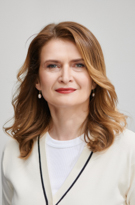
„Date of birth | 25 September 1974 Place of birth | Kaunas, Lithuania“
Santrauka (angl.) Giedrė Balčytytė was born on 25 September 1974 in Kaunas, Lithuania.
„Foreign languages: English (fluent), Spanish (basic), French (intermediate) Family Single“
Santrauka (angl.) Balčytytė is fluent in English, has intermediate proficiency in French, and basic knowledge of Spanish.
„Foreign languages: English (fluent), Spanish (basic), French (intermediate) Family Single“
Santrauka (angl.) She is unmarried.
„Šiemet gyventojai gali susipažinti su... turto deklaracijų išrašų.... deklaracijas, dėl užimamų pareigų... turėjo pateikti... gyventojų ir jų sutuoktinių... (Balčytytė neturi sutuoktinio, tad jos deklaracijos neturi priedų apie sutuoktinio turtą.)“
Santrauka (angl.) Public records do not indicate any significant family wealth or business interests associated with Balčytytė. She is unmarried and has no spouse or dependents to declare, so her financial disclosures pertain solely to her own income and assets. There is no evidence of any family-owned enterprises or inherited property that would notably augment her wealth beyond her earnings.
„Hobbies: travelling, music, reading“
Santrauka (angl.) Her hobbies include traveling, music, and reading.
„2000 | Master’s degree in Information Management, Vilnius University“
Santrauka (angl.) In 2000, she earned a Master’s degree in Information Management from Vilnius University.
„2020–2024 | Chancellor of the Government of the Republic of Lithuania“
Santrauka (angl.) From 2020 to 2024, Balčytytė served as the Chancellor of the Government of the Republic of Lithuania.
„Ministrė Pirmininkė Ingrida Šimonytė nuo gruodžio 14 dienos Vyriausybės kanclere paskyrė Giedrę Balčytytę.“
Santrauka (angl.) Prime Minister Ingrida Šimonytė appointed Giedrė Balčytytė as Chancellor of the Government, effective from 14 December 2020.
„2017–2020 | Global Consulting Strategy director, Norway Registers Development AS“
Santrauka (angl.) From 2017 to 2020, she was the Global Consulting Strategy Director at Norway Registers Development AS.
„2015–2017 | Consultant for International Development Cooperation“
Santrauka (angl.) From 2015 to 2017, she worked as a consultant for international development cooperation projects.
„2012–2014 | Alternate Executive Director, Nordic-Baltic Constituency, Board of Directors of the World Bank“
Santrauka (angl.) From 2012 to 2014, she served as an Alternate Executive Director for the Nordic-Baltic Constituency at the World Bank’s Board of Directors.
„2011–2012 | Senior Adviser, Nordic-Baltic Constituency, Board of Directors of the World Bank“
Santrauka (angl.) From 2011 to 2012, she was a Senior Adviser in the Nordic-Baltic Constituency at the World Bank’s Board of Directors.
„2009–2011 | Adviser to the Minister, Ministry of Finance of the Republic of Lithuania“
Santrauka (angl.) From 2009 to 2011, she was an adviser to the Minister of Finance of the Republic of Lithuania.
„July 2009 - September 2011 Adviser to Minister for Finance Ingrida Šimonytė October 2008 - September 2009 Head of European Information Unit...“
Santrauka (angl.) From 2009 to 2011, she served as an adviser to Finance Minister Ingrida Šimonytė.
„2008–2009 | Head, European Information Unit, Office of the Government of the Republic of Lithuania“
Santrauka (angl.) From 2008 to 2009, she headed the European Information Unit at the Office of the Government of Lithuania.
„2005–2008 | Head, Public Relations Unit, Ministry of Finance of the Republic of Lithuania“
Santrauka (angl.) From 2005 to 2008, she was head of the Public Relations Unit at the Ministry of Finance of Lithuania.
„2002–2005 | Communications Associate, United Nations Development Programme“
Santrauka (angl.) From 2002 to 2005, she worked as a Communications Associate for the United Nations Development Programme (UNDP).
„11/14/2024 | Homeland Union – Lithuanian Christian Democrat Political Group, Member“
Santrauka (angl.) She is a member of the Homeland Union – Lithuanian Christian Democrat Political Group (TS-LKD faction) in the Seimas, since November 2024.
„Member of the Seimas from 11/14/2024“
Santrauka (angl.) She has served as a Member of the Seimas (Lithuanian Parliament) since 14 November 2024.
„Since 2022 | Homeland Union – Lithuanian Christian Democrats“
Santrauka (angl.) Since 2022, she has been a member of the Homeland Union – Lithuanian Christian Democrats (TS-LKD) party.
„Vyriausybės kanclere premjerė Ingrida Šimonytė paskyrė savo štabo prezidento rinkimuose atstovę Giedrę Balčytytę.“
Santrauka (angl.) In 2019, she served as a representative of Ingrida Šimonytė’s campaign team during the Lithuanian presidential elections.
„10/10/2025 | Committee on European Affairs, Member“
Santrauka (angl.) She became a member of the Seimas Committee on European Affairs on 10 October 2025.
„12/18/2024 | Petitions Commission, Deputy Chair“
Santrauka (angl.) On 18 December 2024, she became the Deputy Chair of the Seimas Petitions Commission.
„2024-12-12 | Laikinoji Moterų grupė, narė“
Santrauka (angl.) She is a member of the Seimas Women’s Parliamentary Group (Laikinoji Moterų grupė) since 12 December 2024.
„12/05/2024 | Seimas Delegation to the Parliamentary Assembly of La Francophonie, Deputy Head“
Santrauka (angl.) She is the Deputy Head of the Seimas Delegation to the Parliamentary Assembly of La Francophonie (from 5 December 2024).
„12/04/2024 - 12/17/2024 | Petitions Commission, Member“
Santrauka (angl.) From 4 to 17 December 2024, she was a member of the Petitions Commission of the Seimas.
„11/21/2024 | Provisional Group for Relations between Members of the Seimas and International Financial Institutions, Head“
Santrauka (angl.) She heads the Provisional Group for Relations between Seimas Members and International Financial Institutions (since 21 November 2024).
„11/21/2024 | Provisional Group for Relations between Members of the Seimas and the Organisation for Economic Cooperation and Development (OECD), Head“
Santrauka (angl.) She also heads the Provisional Group for Relations with the Organisation for Economic Co-operation and Development (OECD), starting 21 November 2024.
„11/19/2024 | Committee on Legal Affairs, Member“
Santrauka (angl.) She is a member of the Seimas Committee on Legal Affairs, a position she has held since 19 November 2024.
„11/19/2024 - 10/14/2025 | Committee for the Future, Member“
Santrauka (angl.) She served as a member of the Seimas Committee for the Future from 19 November 2024 until 14 October 2025.
„Nominated by: Tėvynės sąjunga-Lietuvos krikščionys demokratai... Elected: By list“
Santrauka (angl.) In the 2024 parliamentary elections, she was elected to the Seimas via the Homeland Union (TS-LKD) party list.
„Už Tėvynės sąjungą-Lietuvos krikščionis demokratus balsavo 17,96 proc. rinkėjų, tai jiems garantavo 17 vietų parlamente.“
Santrauka (angl.) In the 2024 parliamentary elections, Tėvynės sąjunga-Lietuvos krikščionys demokratai (TS-LKD) secured 17 seats via the nationwide party list, and Balčytytė was among those elected in the multi-member constituency (she did not run in a single-member district).
„Antri yra 17 mandatų iškovoję konservatoriai. Už šią partiją balsavo 17,96 proc. rinkėjų.“
Santrauka (angl.) In the 2024 parliamentary elections, Balčytytė was elected to the Seimas via the Homeland Union–Lithuanian Christian Democrats (TS-LKD) party list. TS-LKD garnered 17.96% of the national vote in the multi-member constituency, which translated into 17 seats in parliament. Balčytytė secured one of those list seats. She did not run in any single-member district; her personal "pirmumo" (preference) votes on the party list were sufficient to keep her within the top elected candidates on the TS-LKD list.
„Valstybinė mokesčių inspekcija (VMI) informuoja, kad savo interneto svetainėje paskelbė metinių gyventojų (šeimos) turto deklaracijų duomenis už 2024 metus.“
Santrauka (angl.) Her annual asset and income declarations are publicly accessible; the State Tax Inspectorate (VMI) regularly publishes data on officials’ declared assets (for example, 2024 declarations were released in mid-2025).
„Eilinis, papildomų pareigų neužimantis Seimo narys nuo šiol gaus beveik 4 tūkstančius eurų į rankas.“
Santrauka (angl.) As a rank-and-file Seimas member, Balčytytė’s monthly salary is about €4,000 net (after taxes) as of 2024.
„Vyriausybės kancleris | 1 | 7 106 | 1 | 7 106“
Santrauka (angl.) The Government Chancellor’s position carried an average monthly salary of roughly €7,100 (gross) during her 2020–2024 tenure.
„Valstybinė mokesčių inspekcija (VMI) informuoja, kad savo interneto svetainėje paskelbė metinių gyventojų (šeimos) turto deklaracijų duomenis už 2024 metus.“
Santrauka (angl.) The details of Balčytytė’s asset and income declarations for the past years are available through the State Tax Inspectorate’s public database (FR0001 forms). For instance, the 2024 annual declaration data were released in mid-2025 on the VMI website, allowing public scrutiny of her declared assets and liabilities.
„Valstybinė mokesčių inspekcija (VMI) informuoja, kad savo interneto svetainėje paskelbė metinių gyventojų (šeimos) turto deklaracijų duomenis už 2024 metus. Šiemet gyventojai gali susipažinti su 45,7 tūkst. viešai skelbiamų turto deklaracijų išrašų. Naujausius duomenis rasite čia.“
Santrauka (angl.) Over the past decade or so, Balčytytė’s asset and income declarations have shown steady, incremental growth in her personal wealth with no irregular spikes. After returning from her well-paid World Bank post in 2014, her declared assets increased in line with the higher earnings she had abroad, but in subsequent years any changes in her net worth have been proportional to her official income. All of her annual asset declaration summaries (FR0001 forms) are publicly available via the State Tax Inspectorate’s system – for example, the data for officials’ 2024 declarations were released in July 2025.
„July 2009 - September 2011 – Adviser to Minister for Finance Ingrida Šimonytė“
Santrauka (angl.) During her tenure as an adviser to Finance Minister Ingrida Šimonytė (2009–2011), Balčytytė was a public sector employee with an estimated monthly salary in the low thousands of euros (significantly less than what she would later earn in top government posts).
„Vyriausybės vadovas... 6,4 tūkst. litų... kiekvienas ministras - 8,6 tūkst. litų... (By comparison, ministerial advisers’ salaries were significantly smaller, only a fraction of these sums, i.e., a few thousand litų per month.)“
Santrauka (angl.) As an Adviser to the Minister of Finance (2009–2011), Balčytytė likely earned around 4,000–5,000 LTL per month (approximately €1,100–€1,450 before taxes). While her precise pay isn’t publicly listed, this estimate is based on the civil-service pay scale of that period (ministerial advisers’ salaries were in the low thousands of litai, in line with other mid-level government officials).
„Ministrų reprezentaciniai fondai didesni nei paties premjero... Vyriausybės vadovas kiekvieną mėnesį gauna 6,4 tūkst. litų... kiekvienas ministras - 8,6 tūkst. litų. Ministrų pareiginiai atlyginimai formaliai mažesni už premjero... (This indicates that mid-2000s public-sector salaries were measured in the low thousands of litai per month.)“
Santrauka (angl.) During her early career in the 2000s, Balčytytė’s salary was relatively modest. For example, as a Communications Associate at UNDP (2002–2005) and later as a Public Relations unit head at the Finance Ministry (2005–2008), her monthly pay was on the order of a few thousand Lithuanian litai (LTL), i.e., a few hundred euros. These roles were standard civil-service or international staff positions, with compensation typical for mid-level professionals at that time.
„2. Lietuvoje turi būti įsteigtas Valstybinis komercinis bankas | | | | | Image | | 3. Mokesčiai verslui turi būti mažinami, net jeigu dėl to mažės valstybės biudžeto pajamos | | | | Image | | |“
Santrauka (angl.) In a 2024 election questionnaire, Balčytytė indicated that she fully opposed establishing a state-run commercial bank in Lithuania and was against lowering business taxes at the expense of state budget revenue.
„Svetainėje „ManoSeimas.lt“ galite... sužinoti, kaip lobistai ir asmenys, kuriems lobistine veikla siekiama daryti įtaką, skelbia savo deklaracijas.“
Santrauka (angl.) As of the end of 2025, Balčytytė had not declared any meetings or contacts with lobbyists in the public transparency register.